

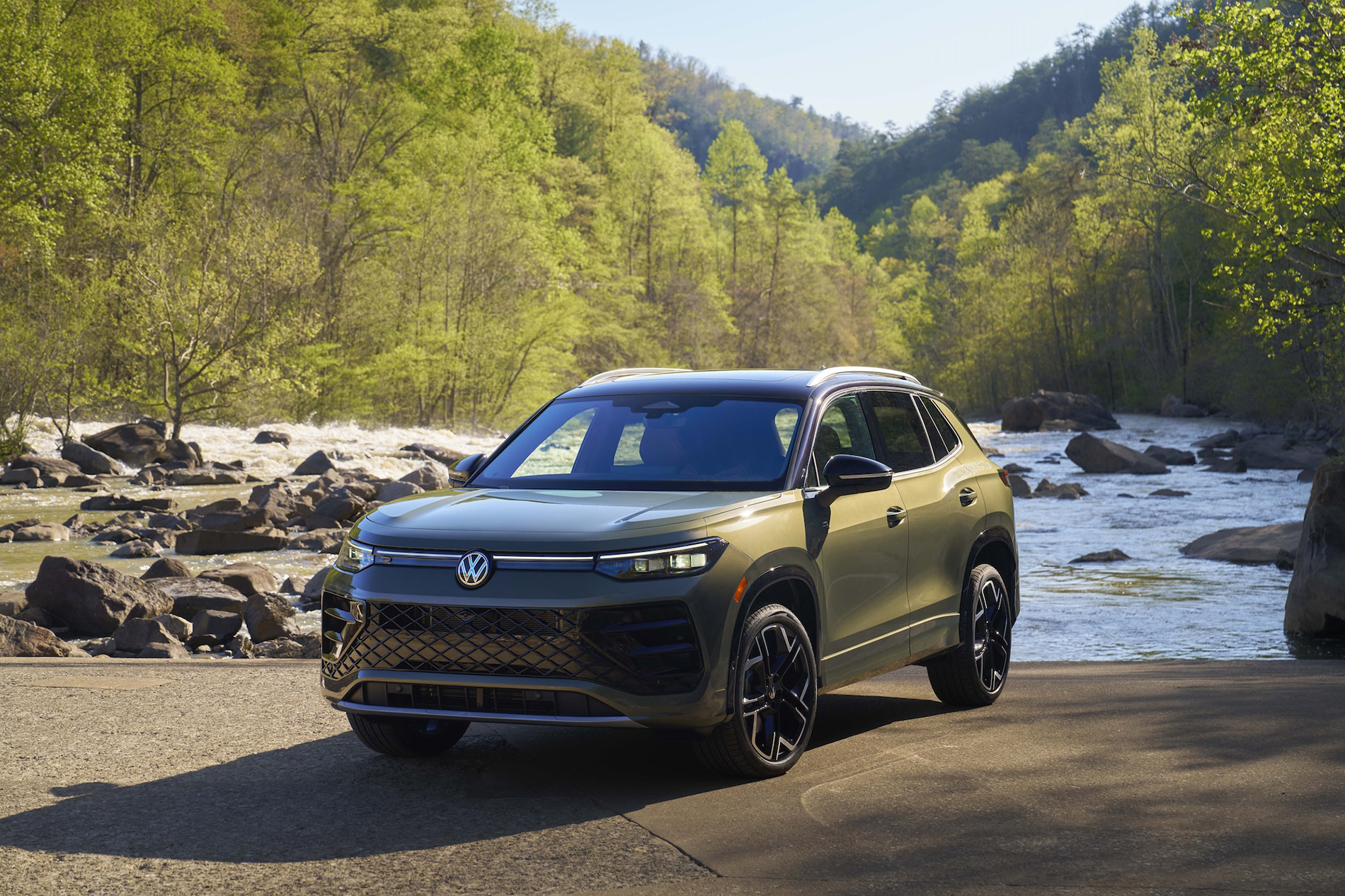
Shopping for a new Volkswagen SUV? With several options in the current Volkswagen lineup, including the allelectric 2026 Volkswagen ID.4 and the gas-powered Tiguan, maybe you’re asking, “Which one is right for me?”
We’re here to help you answer that question by looking at both the ID.4 and the Tiguan and comparing their performance, driving range, space, features, and pricing.
These SUVs offer their own distinct driving experience. The 2026 Volkswagen ID.4 features a quieter ride and zero tailpipe emissions, while the Tiguan features traditional gas-powered performance. Learn more about these two SUVs below, and when you’re ready to make a decision, stop by Low Country VW in Mount Pleasant, SC, for a test drive!
2026 Volkswagen ID.4 vs. Tiguan: Quick Comparison
The biggest difference between these two SUVs is how they operate. The ID.4 runs entirely on electricity, while the Tiguan is powered by a traditional gasoline engine. Here’s how the base trim levels measure up to each other.
|
Feature |
2026 Volkswagen ID.4 Pro |
2026 Volkswagen Tiguan S |
|
Powertrain |
All-electric |
2.0L turbocharged 4-cylinder engine |
|
Horsepower |
282 hp |
201 hp |
|
Transmission |
Single-speed automatic |
8-speed automatic |
|
Drivetrain |
Rear-Wheel Drive |
Front-Wheel Drive |
|
Efficiency |
122/104/113 MPGe (city/highway/combined)1 |
26/34/29 MPG (city/highway/combined)1 |
|
EPA-Estimated Range |
291 miles |
377/493 miles (city/highway)1 |
|
Cargo Space Behind Rear Seats |
30.3 cu. ft. |
33.8 cu. ft. |
|
Maximum Cargo Space |
64.2 cu. ft. |
69.8 cu. ft. |
|
Seating Capacity |
5 |
5 |
H2: Performance: Electric Power vs. Turbocharged Gas
Both SUVs deliver capable performance, but each offers a different driving experience. While all-electric performance appeals to some drivers, other drivers prefer traditional gas-powered performance.
2026 Volkswagen ID.4 Performance
The all-electric 2026 Volkswagen ID.4 Pro produces 282 horsepower and offers smooth, responsive acceleration without traditional gear changes.
Additional benefits include:
- Quiet performance free of engine noise.
- No tailpipe emissions.
- Convenient charging options at home or on the go.
Drivers commuting around Mount Pleasant and Charleston can look forward to a modern driving experience behind the wheel of the ID.4, with zero stops at the gas station.
2026 Volkswagen Tiguan Performance
The Volkswagen Tiguan S is equipped with a 2.0-liter turbocharged four-cylinder engine that produces 201 horsepower and 207 pound-feet of torque. The engine is matched with an eight-speed automatic transmission, offering familiar, traditional performance.
The Tiguan is a strong option for drivers who prefer gasoline power and want to refuel quickly on road trips, instead of waiting on the vehicle to charge.
Which is better? One SUV isn’t necessarily better than the other — it just depends on your preferences and what makes the most sense for your lifestyle. The ID.4 offers more horsepower and smooth electric acceleration, while the Tiguan provides the flexibility and familiarity of a gas-powered SUV.
Efficiency and Driving Range: Which Saves More?
Efficiency is an important consideration for many drivers. So how do the 2026 Volkswagen ID.4 and 2026 Volkswagen Tiguan compare in this category?
Drivers who choose the electric ID.4 Pro can expect an EPA-estimated 122/104/113 MPGe (city/highway/combined)2 and a driving range of 291 miles.3
Drivers who choose the gas-powered Tiguan S can expect an EPA-estimated fuel economy of 26/34/29 MPG (city/highway/combined)4 and a driving range of 377/493 miles (city/highway).1
Keep in mind that MPGe and MPG measure efficiency differently, so these figures aren't directly interchangeable.
Charging vs. Filling Up
The ID.4 offers different options for charging. This EV can be charged at home or at public charging stations, depending on the driver’s needs.
If you’re charging at home using up to 11 kW with the available home wall charger, you can expect your ID.4 to charge from empty to full in up to eight hours, approximately.5 If you’re using DC fast charging, you can expect your ID.4 to charge from 10% to 80% battery in 28 minutes, approximately.6
The Tiguan offers a different kind of convenience. When the fuel tank is getting low, you can stop at a gas station and refuel in minutes. This minimizes stopping time during road trips, allowing for greater flexibility.
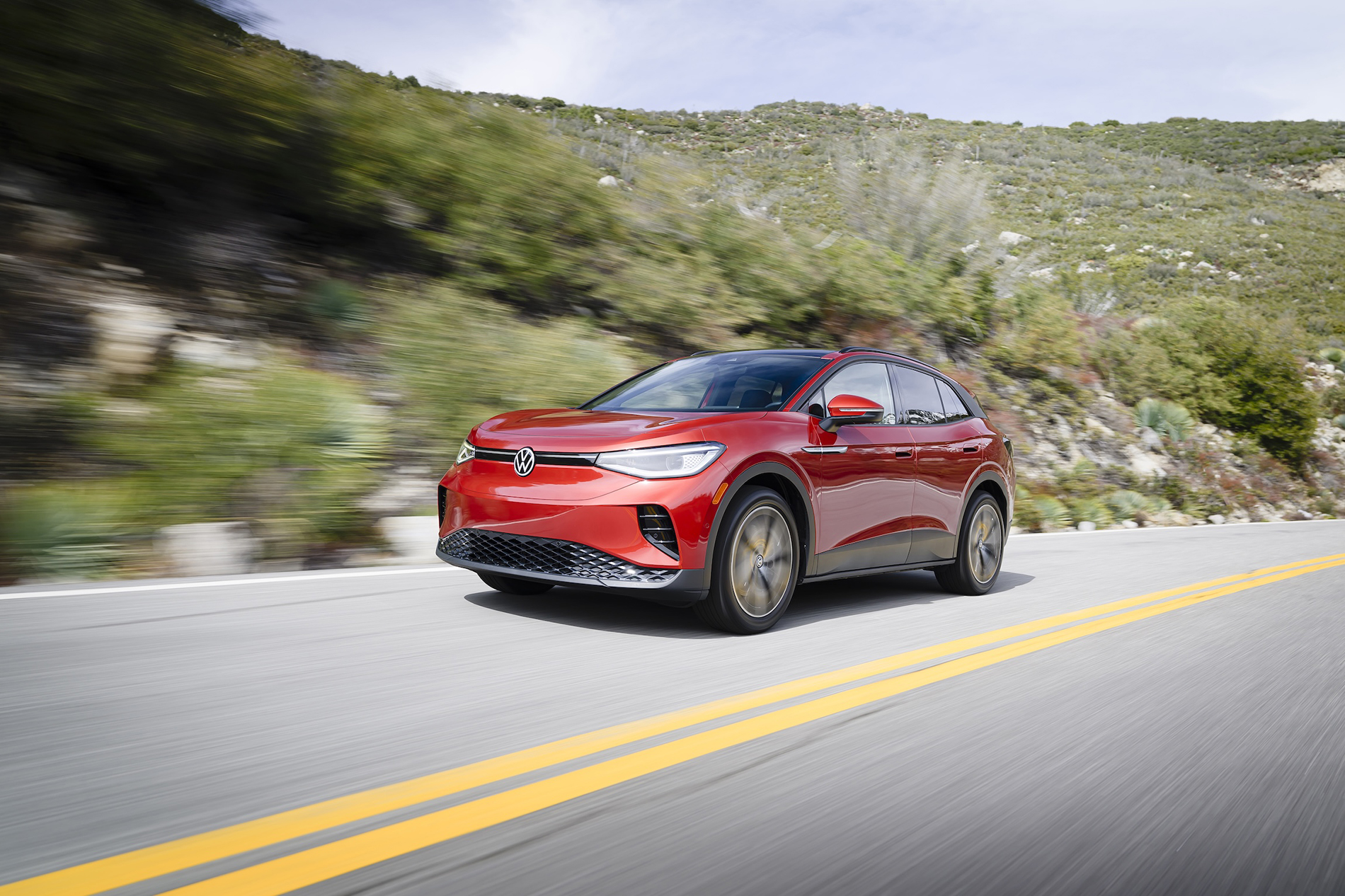
Interior Space and Cargo Capacity
Both Volkswagen SUVs offer seating for five and provide flexible interior space to accommodate different needs, from grocery runs to family road trips. Here’s how the ID.4 and Tiguan compare in terms of cargo space and legroom.
|
Interior Space |
Volkswagen ID.4 |
Volkswagen Tiguan |
|
Cargo Space Behind Rear Seats |
30.3 cu. ft. |
33.8 cu. ft. |
|
Maximum Cargo Space With Rear Seats Folded |
64.2 cu. ft. |
69.8 cu. ft. |
|
Front Legroom |
41.1 in. |
40.2 in. |
|
Rear Legroom |
37.6 in. |
40.2 in. |
While the ID.4 gives you more legroom in the front row than the Tiguan, the Tiguan gives you more legroom in the second row, as well as more cargo space. If passengers will be riding in the rear or you want extra cargo space for road trips and grocery runs, the Tiguan might be your best option.
However, the ID.4 still offers ample space and flexibility for drivers who want all-electric performance.
Technology and Comfort
Both the 2026 Volkswagen ID.4 and Tiguan feature advanced technology and comfort features that enhance every journey.
Features these two EVs have in common include:
- 60/40 split folding second-row seats for convenient flexibility
- Wireless charging
- Heated front seats
- Climatronic® dual-zone automatic climate control
- 12.9-inch center infotainment display
- Wireless App-Connect (Apple CarPlay® and Android Auto™)
- Adaptive Cruise Control
No matter which SUV you choose, comfort and convenience are top priorities in both, especially if you upgrade to higher trim levels.
Is the Volkswagen ID.4 or Tiguan More Affordable?
Purchase price and long-term ownership costs could be the deciding factors when comparing an all-electric SUV and a traditional gas-powered SUV.
So how much do these two SUVs cost?
The starting price point of the 2026 ID.4 is $45,095,7 while the starting price point of the 2026 Tiguan is $30,805.8
That’s a pretty significant price difference, but keep in mind that the electric ID.4 may have fewer maintenance needs than the Tiguan. According to the Alternative Fuels Data Center, EVs usually require less maintenance due to factors like regenerative braking, which reduces brake wear, and the absence of an engine, which means fewer moving parts and no engine oil to change.
Other expenses, including insurance and financing, also affect the total cost of ownership. Before making your final decision between the ID.4 and the Tiguan, compare the actual purchase price of the trim levels you're considering and estimate your expected monthly energy or fuel expenses. Available incentives and dealership offers can help you save, so be sure to ask us about current specials.
Which Volkswagen SUV Is Right for You?
Still can’t decide between the ID.4 and Tiguan? Here are a few final considerations.
Choose the Volkswagen ID.4 if:
- You want all-electric performance and zero emissions.
- You prefer a quieter drive.
- You are able to charge your EV at home and have access to public chargers.
- Your driving needs align with the vehicle's available range.
- You want a vehicle that needs less maintenance.
Choose the Volkswagen Tiguan if:
- You prefer a traditional gasoline engine.
- You want a minimal wait time when refueling.
- You need extra cargo space and second-row legroom.
- Access to charging options is limited.
- You want a lower starting price point.
Explore Volkswagen SUVs at Low Country VW
Both the 2026 Volkswagen ID.4 and 2026 Volkswagen Tiguan offer a variety of advantages for Mount Pleasant drivers. No matter which SUV you choose, the team at Low Country Volkswagen is here to answer your questions, help you compare both SUVs, make the buying or leasing process simple, and support you throughout your Volkswagen ownership journey.
Whenever you’re ready to take the next steps toward upgrading to your Volkswagen of choice, contact us or stop by Low Country VW in Mount Pleasant, SC.
Frequently Asked Questions
Is the 2026 Volkswagen ID.4 better than the Tiguan?
One SUV isn’t necessarily better than the other — it all comes down to driver preference and lifestyle. While EV performance may work well for one driver, it may not be ideal for another driver.
How far can the 2026 Volkswagen ID.4 travel on a full charge?
The 2026 Volkswagen ID.4 Pro offers an EPA-estimated driving range of 291 miles,3 with convenient charging options to choose from.
Is the 2026 Volkswagen Tiguan gas-powered?
Yes. The 2026 Volkswagen Tiguan is equipped with a standard 2.0-liter turbocharged 4-cylinder engine that delivers 201 horsepower and 221 pound-feet of torque with all-wheel drive models and 207 pound-feet of torque with front-wheel drive models.
You’ll get a more powerful engine if you opt for the 2026 Volkswagen Tiguan SEL R-line turbo, which delivers 268 horsepower and 258 pound-feet of torque.
Is an electric Volkswagen cheaper to drive than a gas-powered Volkswagen?
It can be, but it depends. Electricity may cost less per mile than gasoline, especially when charging at home, but your actual savings depend on electricity rates, gas prices, insurance, maintenance, and purchase price.
Can I charge the Volkswagen ID.4 at home?
Yes. Volkswagen makes charging at home easy. You can charge your ID.4 using a standard 120v household outlet or a 240v outlet. And when you’re out and about, you can charge your EV at a public charging station.
Does the 2026 Volkswagen Tiguan have all-wheel drive?
Yes. While front-wheel drive is standard, 4Motion® all-wheel-drive is an available option. The system includes Active Control, which features four settings to fit different driving conditions: Onroad, Snow, Offroad, and Custom Offroad.
1According to Edmunds.com.
2Actual mileage and range will vary and depend on several factors including driving and charging habits, weather and temperature, battery age, and vehicle condition. Battery capacity decreases with time and use. See owner’s manual for details.
3Actual mileage and range will vary and depend on several factors including driving and charging habits, accessory use, temperature and topography, battery age, load, and vehicle condition. Battery capacity decreases with time and use. See owner’s manual for details.
4Where stated, fuel economy values (mpg) are EPA estimates. See www.fueleconomy.gov for details. Your mileage will vary and depends on several factors, including driving habits and vehicle condition.
5Vehicle maximum AC acceptance rate is 11kW. Charging times will vary and depend on a variety of factors, including ambient temperature, kW, charging rate of home charger, battery condition and initial state of charge, vehicle condition and others.
6Based on charging at 200kW. Charging times will vary and depend on a variety of factors, including ambient temperature, charger type, battery condition and initial state of charge, vehicle condition and others. Frequent and consecutive fast charging can permanently decrease battery capacity.
7Starting MSRP of $45,095 for a 2026 Volkswagen ID.4 Pro with single-speed automatic transmission. Prices exclude destination, taxes, title, other options, and dealer charges. Dealer sets actual price.
8All prices provided are the Manufacturer’s Suggested Retail Price and exclude destination, taxes, title, accessories installation, other options and dealer charges. Dealer sets actual price.